
Xendure is a distributed, parallel data storage system designed to store extremely large datasets, from hundreds of terabytes to hundreds of thousands of terabytes.
Xendure distributes data across large numbers of conventional disks in servers using proprietary algorithms. This architecture enables capabilities, capacity, and performance far beyond those typically available from conventional storage systems.
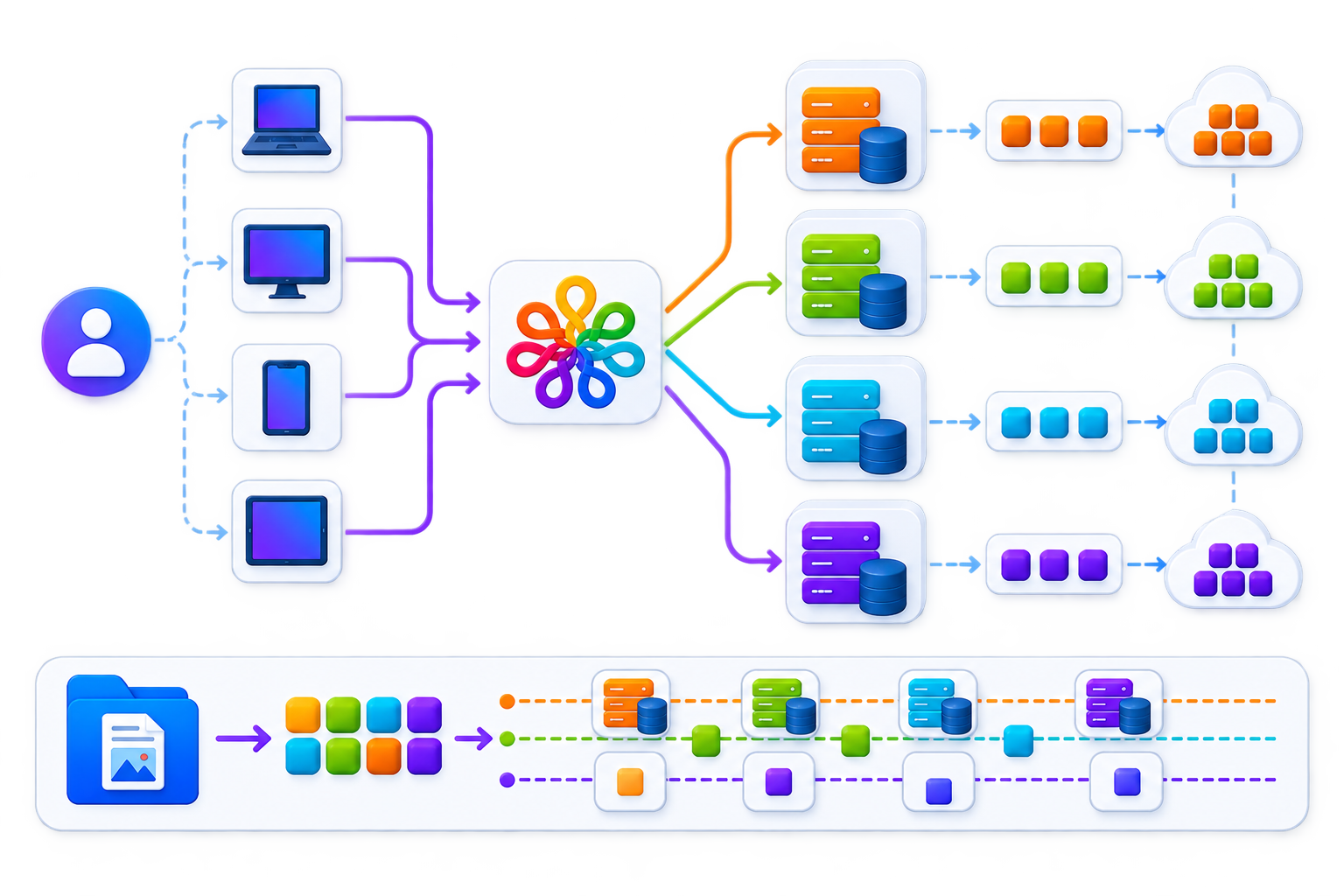
How Xendure Works
$ discover --features
Scale out to hundreds or thousands of terabytes of data
Checksums and layered protection for data integrity
No dependence on proprietary hardware from a specific vendor
Increase capacity, bandwidth, and processing power by adding nodes
Manage disks and nodes through a Web GUI or CLI
Assign different protection coefficients to individual files
Add disks or nodes and use the additional capacity immediately
Use disks with different capacities, models, types, and manufacturers
$ read | more

$ cat why-us?.txt



Many storage companies in Iran primarily act as importers and do not develop storage systems themselves. Their services therefore often remain focused on hardware replacement. We designed Xendure from the ground up, giving us deep knowledge of its architecture and the ability to add and evolve capabilities as requirements change.
Because of its object-storage-oriented architecture, Xendure is particularly well suited to environments with very large datasets, such as video, audio, image, and other media archives.
One well-known comparable system is Dell Isilon. A key difference is that Isilon relies on proprietary hardware, while Xendure is designed to be hardware agnostic.
Although open-source storage can appear attractive because the software license may cost little or nothing, its total cost of ownership can be substantially higher. Specialized engineering expertise is often required to deploy, operate, troubleshoot, and maintain the system. Staff turnover can also create operational risk. In addition, some open-source solutions may lack a dedicated client or depend on source code that has not received the level of security review required for a production storage platform.
$ mail --compose