Architecture
Architecture components
How the Architecture Works
The Xendure architecture consists of one or more master servers and multiple storage nodes with different capacities.
Unlike RAID, where a central controller splits data and writes it across storage servers, Xendure distributes the data path to the clients. Each client handles data chunking, sends the chunks to the storage nodes, and reassembles the data when reading it back. The controller effectively acts as an orchestrator that directs these operations. As a result, adding storage nodes or clients increases aggregate read/write bandwidth. This is fundamentally different from traditional architectures, where adding more clients simply increases the load on a central storage system.

$ cat | elements
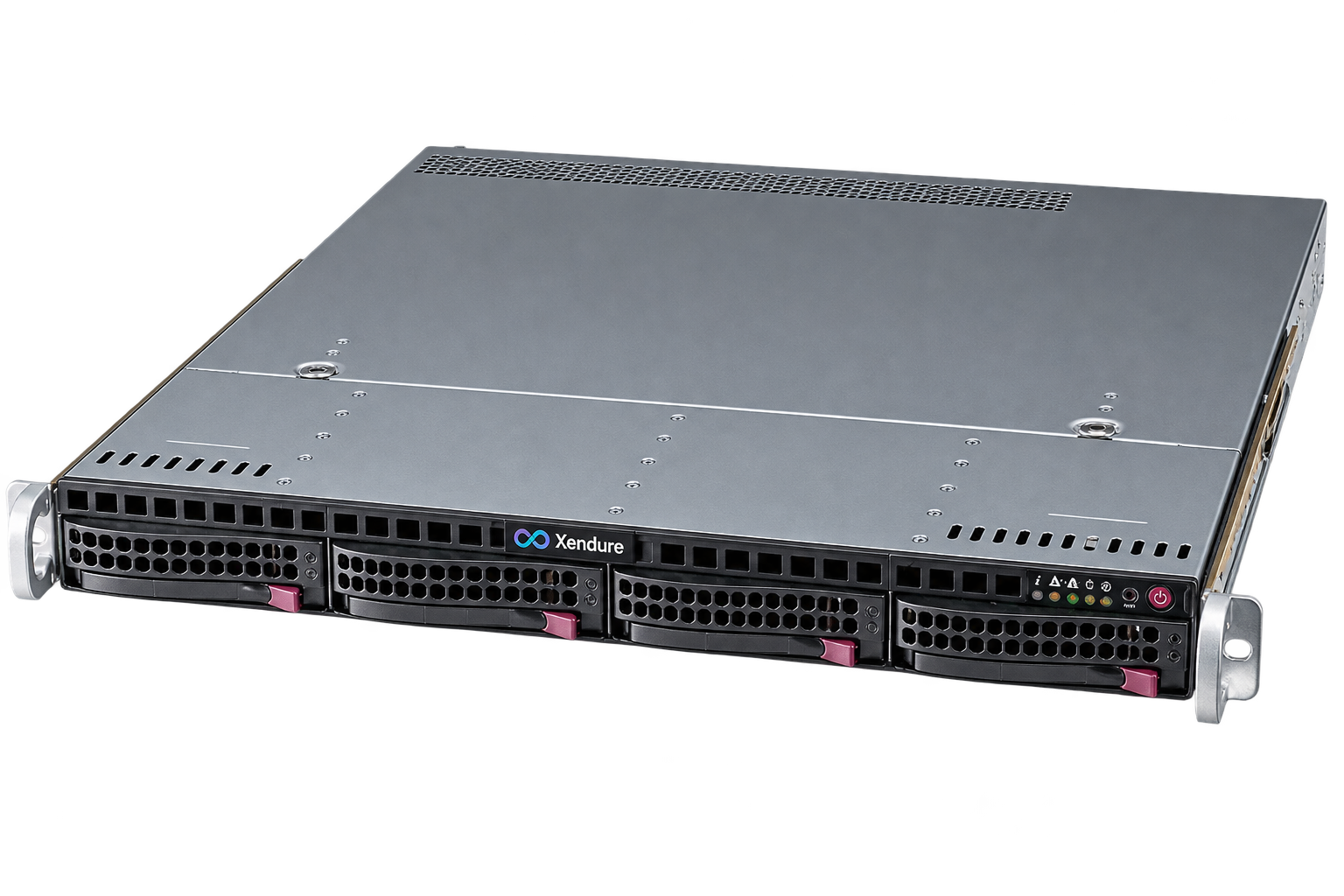
MDS Server
The MDS server acts as the Master or Orchestrator.
Think of it like the coxswain on a racing boat, calling the pace so every rower stays in sync. Clients and storage nodes coordinate with the MDS server to determine which storage node and disk should receive each piece of data, and where data should be read from.
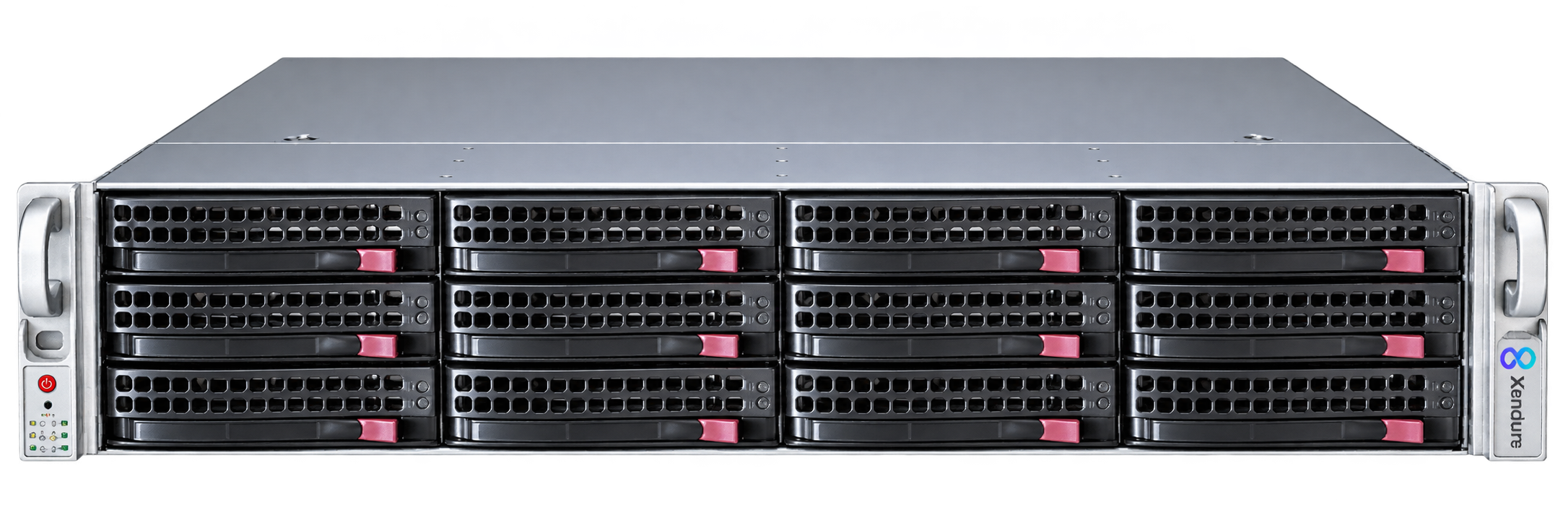
XC12 Storage Node
The XC12 storage server, with 12 drive bays, is designed for deployments where a smaller storage footprint or higher processing performance is required.
Each XC12 node provides substantial compute capacity with fewer SSDs or drives, allowing it to contribute additional processing power to the overall cluster.
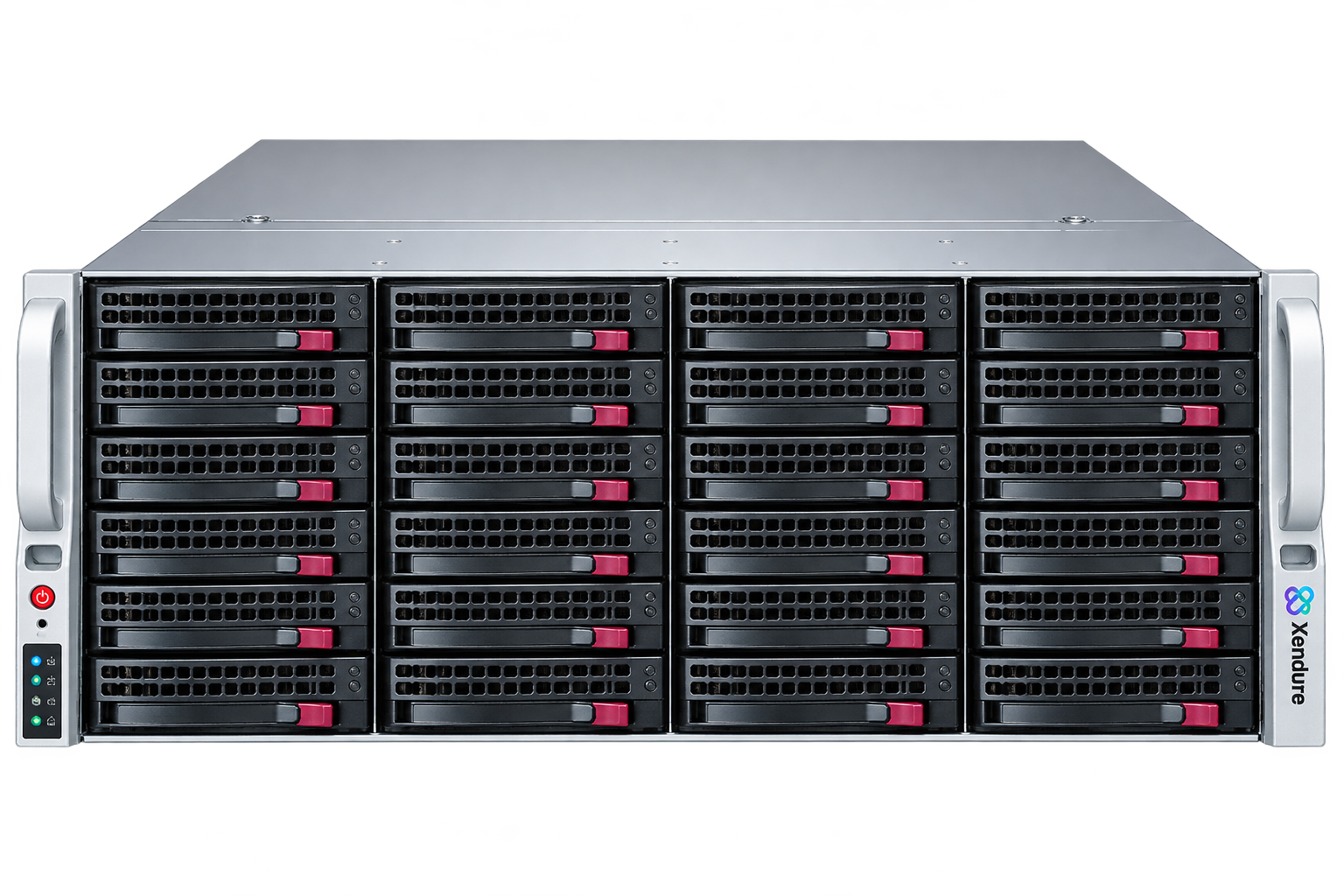
XC36 Storage Node
The XC36 storage server provides 36 drive bays—24 in the front and 12 in the rear—for deployments that require very high storage density.
With its large per-node capacity, the XC36 is designed to maximize usable capacity while minimizing rack space.
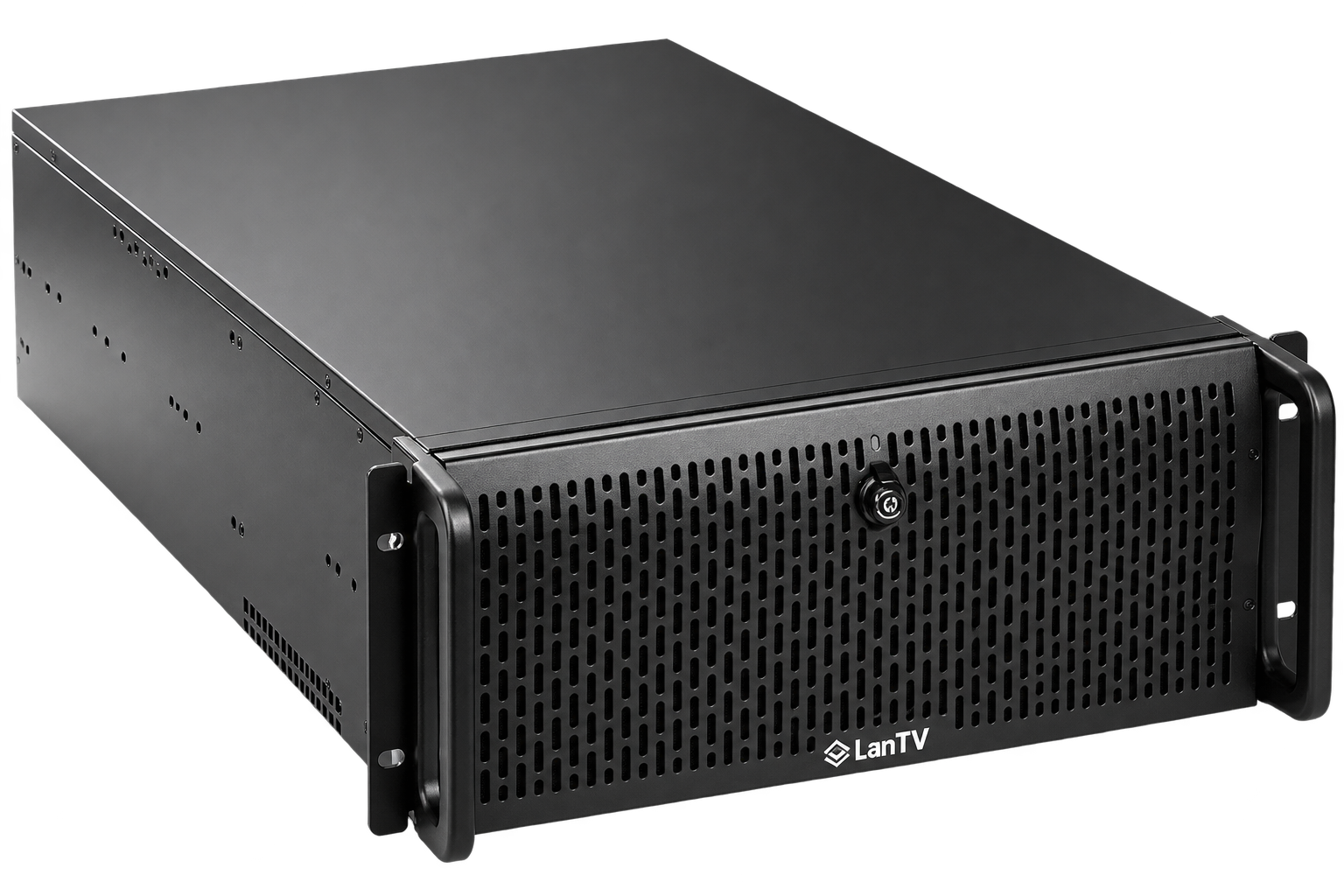
LanTV Server
The LanTV server is not part of the Xendure architecture itself. However, the two systems are frequently deployed together in IDEANO’s TV and satellite monitoring solutions.
LanTV can ingest and stream hundreds of radio and television channels simultaneously across a LAN. For long-term recording of those streams, Xendure provides an ideal storage backend.
For more information about LanTV and how it works, visit its dedicated website.