
Executive Summary
Broadcast archives preserve decades of television and radio history, making their contents valuable both as organizational assets and as records of society. Moving from film and videotape to digital files changes the economics and technical requirements of preservation: large collections require scalable capacity, reliable protection, efficient access, and a clear strategy for online, nearline, and offline content. Yet preservation alone is not enough. Search and discovery determine whether archived material can be reused for news, documentaries, research, production, and future programming. Security is equally important because historical footage may be irreplaceable even when its immediate commercial value is unclear. An effective archive therefore combines durable storage with accessibility, organization, protection, and long-term scalability.
Xendure provides the online storage foundation for such environments, enabling broadcast organizations to keep growing collections accessible while expanding capacity as new material arrives. Treating archive infrastructure as an active content platform preserves memory and increases value.
Audio and Video Archives: Organizational Assets and Historical Memory
For a broadcast organization, an audio and video archive is far more than a collection of old programs. It is one of the organization’s most valuable content assets and, at the same time, part of a nation’s historical record. Television and radio networks have documented political, social, cultural, sporting, and economic events for decades. Much of this footage may now be the only surviving record of a particular event, person, or historical period.
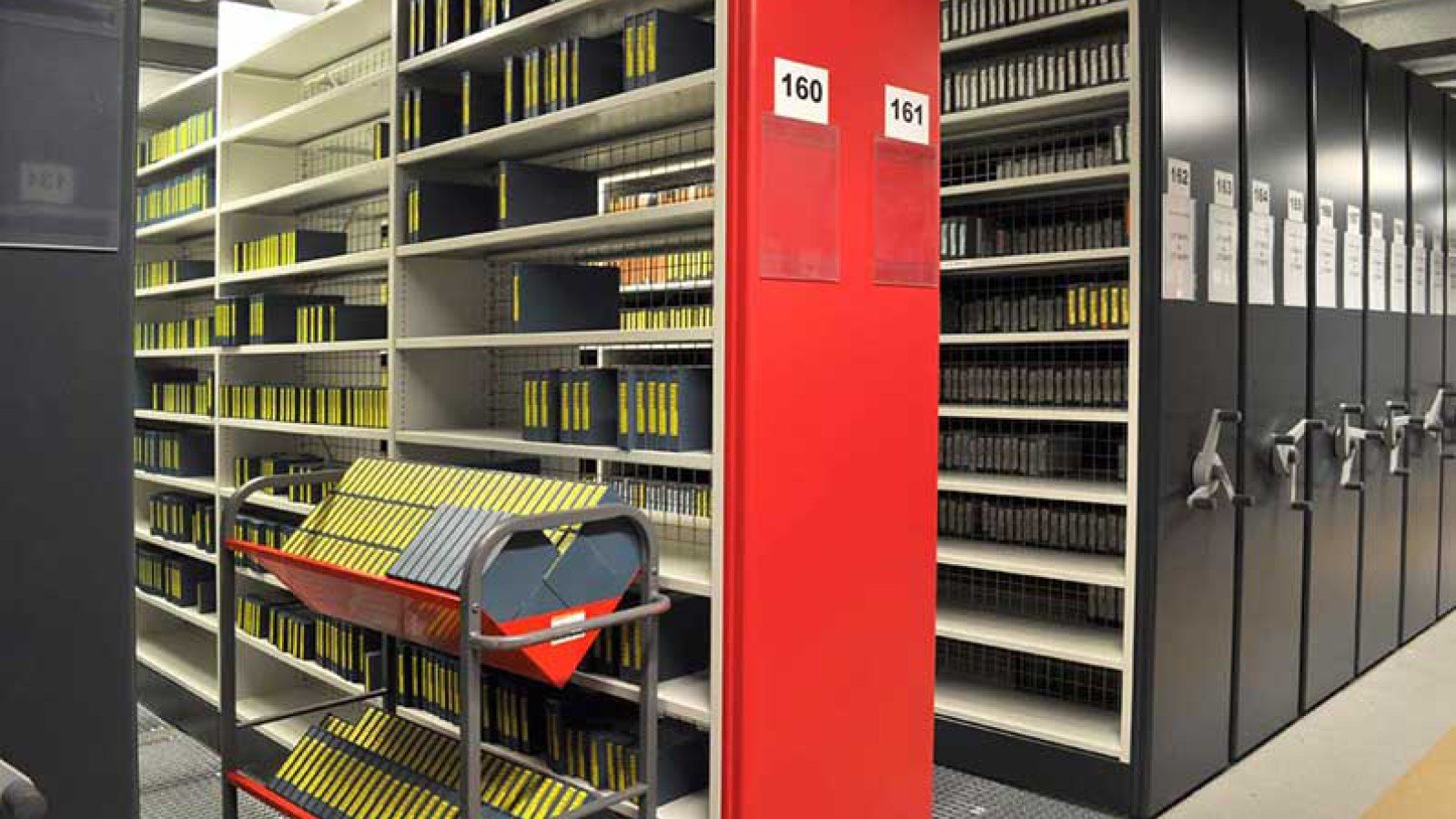
For organizations such as national broadcasters, the value of this archive goes well beyond its historical significance. An old interview, news report, speech, national ceremony, wartime footage, sporting event, or television program can be reused years later for documentaries, new productions, academic research, or future news coverage. The archive should therefore be treated as a long-term content asset—one whose value can increase over time.
Historical events cannot be recreated, but a broadcaster’s archive can bring those moments back to a new generation.
Broadcast archives do more than preserve an organization’s past; they preserve part of a country’s past for the future.
From Film and Video Tape to Digital Files
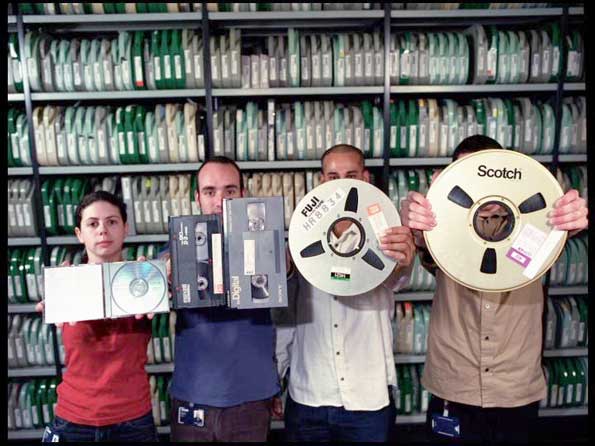
The history of broadcast archives is also a history of storage technology. In the early years, a significant amount of visual content was captured and preserved on motion-picture film in formats such as 8mm, 16mm, and 35mm. Film has significant historical value, but physical preservation requires controlled storage, specialized equipment, and access to suitable playback and transfer systems. As professional video production expanded, U-matic tapes entered the production and archival workflow. The Betacam family—particularly Betacam SP and Digital Betacam—later became major broadcast formats. Formats such as DVCAM and other digital tape standards followed. Real-world archives today are often a mix of these generations, potentially containing film, U-matic, Betacam, DVCAM, and file-based digital formats side by side.
The move to fully digital production brought the transition from tape to a File-Based Workflow. In this model, audio and video are stored as files in formats suited to production, playout, distribution, or long-term preservation. This was a fundamental shift: content was no longer a physical object sitting on a shelf, but a collection of files, metadata, and descriptive information that could be searched, copied, processed, and managed across multiple systems.
Offline, Nearline, and Online Archives
As archives became digital, the key question changed from simply “Where do we store it?” to “How quickly does each asset need to be available?” Modern archives therefore commonly use multiple storage tiers.
Offline Archive is the most traditional retention model. Film and video tapes are stored on shelves or in dedicated vaults, and retrieving content requires locating the physical media, loading it into the appropriate equipment, and reading it back. This model can deliver high capacity, but access is slow and dependent on legacy hardware.
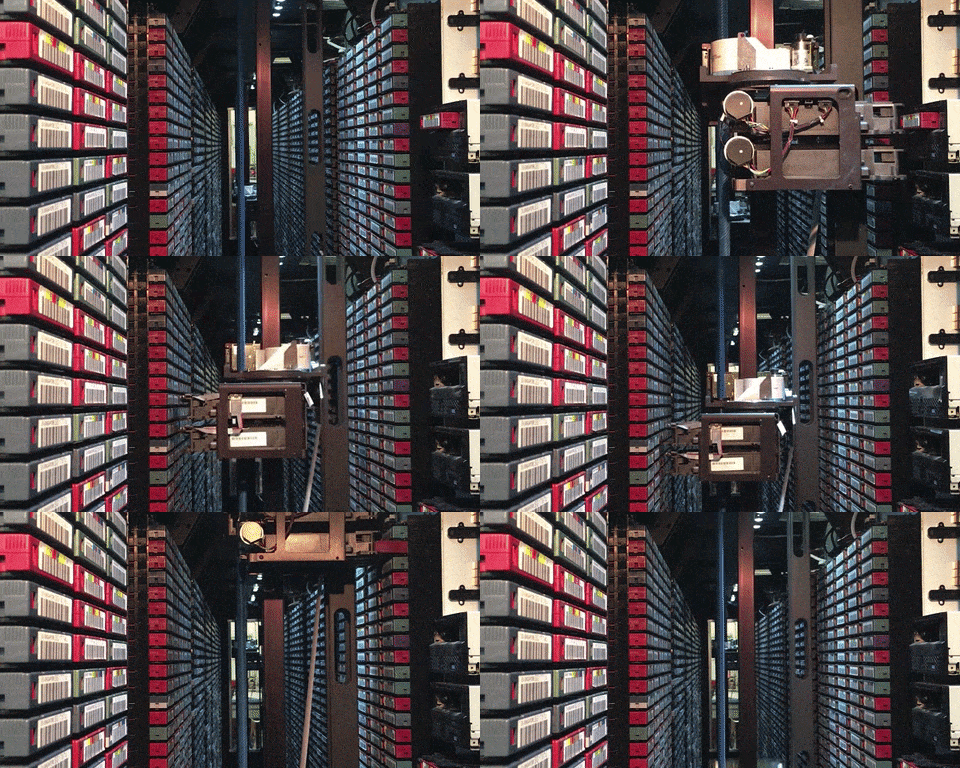
Next is Nearline storage. LTO tape and Tape Libraries are common examples. Files remain on tape, but the library automatically locates the required cartridge and restores the content. Users do not need to retrieve tapes manually, although restores are still slower than access from online disk. LTO remains a key nearline technology because of its high capacity, attractive economics, and long media life.
At the other end is the Online Archive, where content resides on connected, high-performance storage and users can access files almost immediately. In a well-designed architecture, all three tiers work together, with content moving between them according to access frequency, business value, and required retrieval speed.
Search and Discovery: The Real Value of an Archive
A broadcaster may have millions of audio and video assets, so filenames alone are not enough to locate a specific piece of content. Metadata such as dates, locations, people, subjects, programs, events, and production details must be searchable.
An archive that is difficult to search loses a significant part of its value.

For Offline and Nearline archives, a common approach is to create a Proxy or Low-Resolution Copy for each master asset. Users can search and review these lightweight copies first, then request the Hi-Res master when needed. The system must locate the appropriate tape and restore the original file, which can take minutes or longer and can therefore limit the speed at which the archive can be used.
By contrast, when the master content is kept on Online storage, search, preview, and file delivery can be handled through a single integrated environment. This makes access speed just as important as archive capacity.
Archive Security: Protecting Irreplaceable Memory
For broadcast archives, data loss can be irreversible. An old program may be recreated, but a historical event cannot be filmed again. Archive protection must therefore account for hardware failure, human error, physical disasters, and cyberattacks.
A widely used data-protection principle is the 3-2-1 rule: maintain at least three copies of the data, on two different types of media, with at least one copy stored at another location. An Off-Site copy is especially important because a fire, flood, major site failure, or cyberattack can compromise the primary facility while the secondary copy remains available for recovery. Tape can also provide a physically isolated, and potentially Air-Gapped, protection layer against cyber threats.
Xendure: Online Infrastructure for Broadcast Archives
In a modern archive architecture, Xendure can provide the high-capacity Online storage tier, keeping large volumes of audio and video assets available without tying the archive to a single server or a limited storage array. Xendure’s Distributed, Scale-Out architecture allows capacity to grow incrementally by adding nodes, so organizations do not have to replace the entire storage platform as the archive expands. It can provide unified access to large media volumes, retain both Hi-Res masters and Proxy files, and integrate with Media Asset Management (MAM) systems. Alongside LTO and other archive tiers, Xendure can form the Online layer of a multi-tier architecture—one designed not merely to store content, but to preserve, protect, and keep the nation’s visual and audio memory accessible.