
Executive Summary
Corporate archives preserve institutional memory, historical evidence, and content that may never be recreated. Photographs, documents, films, recordings, and operational footage can reveal how facilities were built, projects were delivered, industries evolved, and major events unfolded. Despite their value, archives are often treated primarily as a storage cost, left on aging media or scattered across disconnected systems. Digitization changes that equation by making historical material easier to preserve, organize, search, reuse, and potentially monetize. Online storage is particularly important when archived content must remain available for research, legal needs, communications, production, or new business opportunities rather than being retrieved only occasionally.
Xendure provides an infrastructure layer for transforming these collections into accessible digital assets, combining large capacity with scalable growth and dependable storage. The strategic objective is not simply to keep old files alive, but to create an environment where institutional knowledge remains available and useful for long-term organizational use.
Corporate Archives: A Record That Cannot Be Recreated
Corporate archives are more than collections of old documents, photographs, films, and files. They preserve an organization’s institutional memory and, in many cases, part of a country’s historical record. Over decades of operation, every organization captures events that may never happen again. The true value of these archives becomes clear when some historical images turn out to be the only surviving record of an event.
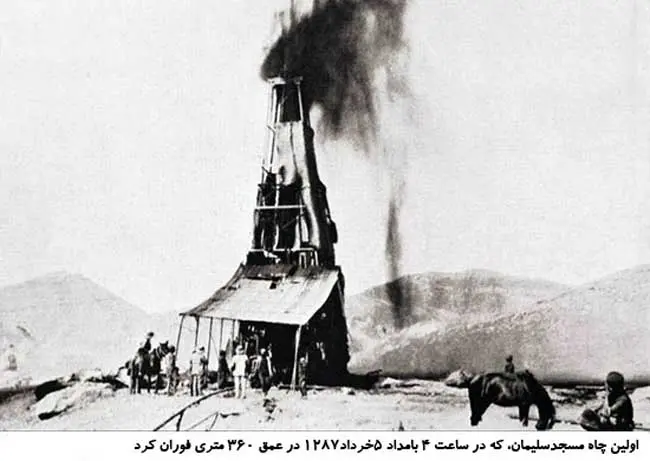
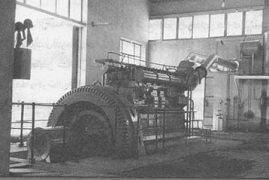
For example, an oil company’s archive may contain the earliest footage of drilling a field, constructing oil facilities, commissioning refineries, and developing the country’s oil fields. An energy ministry’s archive may contain footage of the construction of early power plants, equipment installation, dam inaugurations, and the commissioning of generating units. These are not merely organizational records; they are part of the country’s industrial and economic history.
The same is true of archives documenting soldiers, families, and major social events. Photographs, video, documents, and personal accounts can capture important parts of a country’s contemporary social history. A moment such as the death of a soldier or the last recorded images of a serviceman happens only once. If that footage is lost, no camera or technology can recreate the original moment.
These archives are also invaluable resources for producers, documentary filmmakers, journalists, researchers, and academics. A decades-old image can help a filmmaker tell the story of an industry, give a researcher primary material for studying a historical period, or show a new generation what a city, industry, or society looked like in the past. Preserving corporate archives is therefore an investment in preserving collective memory.
Archives That Are Often Overlooked
Despite their value, archives are often not treated as a priority for investment or information management. A significant amount of historical content may still sit in archive rooms, warehouses, tape shelves, aging hard drives, or systems that were never designed for long-term access and preservation.
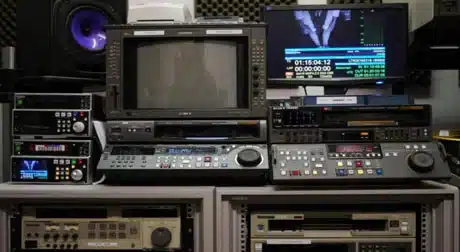
One major problem is dependence on legacy media and equipment. An organization may still have film, video tape, or optical discs for which compatible playback hardware is difficult to source. Even when the physical media is intact, degradation, poor storage conditions, equipment failure, and a shortage of specialized staff can make the content difficult or impossible to access.
Another problem is poor cataloging and search. An archive may contain millions of photographs and thousands of hours of video, but if nobody can quickly determine where an asset is or what metadata exists for it, much of its practical value is lost. The archive therefore needs to evolve from a “warehouse of old information” into a managed digital asset.
From Preservation Cost to Revenue Opportunity
Beyond their historical value, corporate archives can also become economic assets. Researchers, documentary producers, television networks, production companies, and media organizations frequently need historical footage and documents to create new content. An organization with a valuable archive can establish the appropriate legal and commercial framework and make selected content available for research, news, education, and documentary production.
For example, historical footage of an oil-field drilling project, a refinery opening, the construction of a power plant, or a major historical event could become valuable material for a documentary. Instead of treating the archive purely as a preservation cost, the organization can turn it into a monetizable asset.
Generating revenue from an archive requires more than simply storing files. The organization needs metadata management, search and discovery, preview capabilities, content-rights management, licensing workflows, and ultimately delivery of the original master file. The faster and more digital this workflow becomes, the greater the potential for commercial and research use.
Why Archives Need Online Storage

Turning an archive into a searchable, monetizable asset requires more than digitizing the content. Archive assets—especially high-resolution images and video—can consume enormous amounts of storage and continue to grow over time. Organizations therefore need infrastructure capable of keeping very large datasets in a centralized, high-performance, scalable storage environment.
Online storage allows users to search and preview archive content without physically retrieving media or waiting for a tape restore. In an online archive storefront, for example, a documentary producer can find the required asset, review its Proxy, check the associated metadata and usage rights, and, after purchase or licensing approval, receive the original master file.
This model turns an archive from a passive repository into a digital library and service platform. The faster the access, the better the discovery experience, and the more storage capacity available, the greater the potential for broader archive usage and sustainable revenue.
Xendure: Infrastructure for Turning Archives into Digital Assets
Xendure can serve as the Online storage foundation for this architecture, providing the capacity to retain very large volumes of photographs, video, audio, and digital documents. Its Distributed, Scale-Out architecture allows storage capacity to grow incrementally with the archive, without requiring a forklift replacement of the entire storage infrastructure.
For organizations whose archives grow from a few terabytes to tens or hundreds of terabytes—or even petabytes—this capability is particularly valuable. Hi-Res masters can be stored alongside Proxy versions and their associated metadata, while enterprise content-management systems or archive storefronts can access the content as required.
In this model, Xendure is more than a place to put files. It can become part of the infrastructure that turns an organization’s historical archive into a secure, searchable, accessible, and monetizable digital asset. The organization can preserve its historical mission while also unlocking the archive for research, content production, and new revenue opportunities.