
Executive Summary
Security video has become a critical organizational record, supporting incident investigation, operational safety, compliance, and accountability across airports, industrial facilities, transportation networks, public spaces, and other sensitive environments. As camera counts, resolutions, frame rates, retention periods, and analytics workloads increase, video repositories can grow from a few terabytes to hundreds of petabytes. Storage therefore must provide more than raw capacity: it must sustain continuous writes, support long retention, remain accessible for investigation, and scale without disrupting existing operations.
Xendure addresses these requirements as large-scale storage infrastructure for security video, providing a foundation for centralized, durable archives and growth over time. A suitable architecture separates the requirements of continuous recording, online access, retention, protection, and expansion while avoiding infrastructure designs that become difficult to manage at scale. Distributed storage lets organizations add capacity progressively while maintaining service as environments grow. Preserve critical evidence reliably over time across growing security environments globally.
Security Video: Evidence You Cannot Afford to Lose
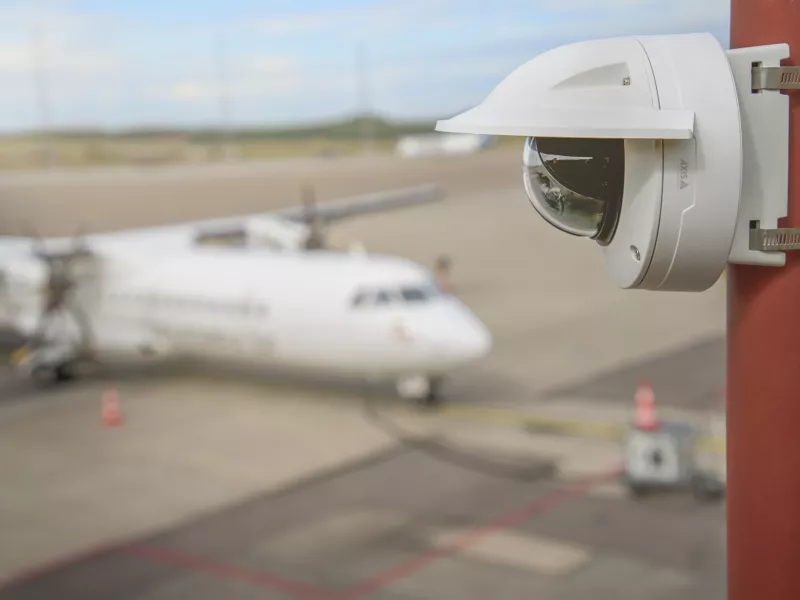
CCTV cameras are no longer just tools for real-time situational awareness. Their footage has become part of the security, safety, and risk-management infrastructure of modern organizations. At a refinery, a camera can capture an incident, unauthorized access, a leak, a fire, or the condition of critical equipment. At an airport, video is essential for monitoring passenger movement, restricted areas, baggage handling, parking, airside zones, and responses to security incidents. Airport CCTV coverage can span terminals and public areas through perimeter gates, baggage facilities, parking areas, and fuel-service zones.
The same applies to rail and metro systems, where cameras are used to investigate incidents, identify individuals, monitor platforms and tunnels, protect stations and equipment, and reconstruct events in detail. In oil and gas operations, the stakes are even higher because large industrial sites, hazardous areas, tanks, pipelines, and multiple operational zones require continuous monitoring.
The same principle applies to city surveillance and traffic systems. Footage from intersections, highways, city entry and exit points, and license-plate recognition systems can support traffic management, accident investigation, enforcement, and forensic analysis. Major cities around the world can operate tens of thousands to hundreds of thousands of government-owned or government-accessible cameras, with some deployments approaching the million-camera mark.
A camera feed, therefore, is not simply transient data. An incident may happen only once, and hours later the recorded video may be the only reliable evidence available to reconstruct what happened. From this perspective, reliable video retention is an integral part of organizational security and risk management.
Data Scale: From a Few Terabytes to Hundreds of Petabytes
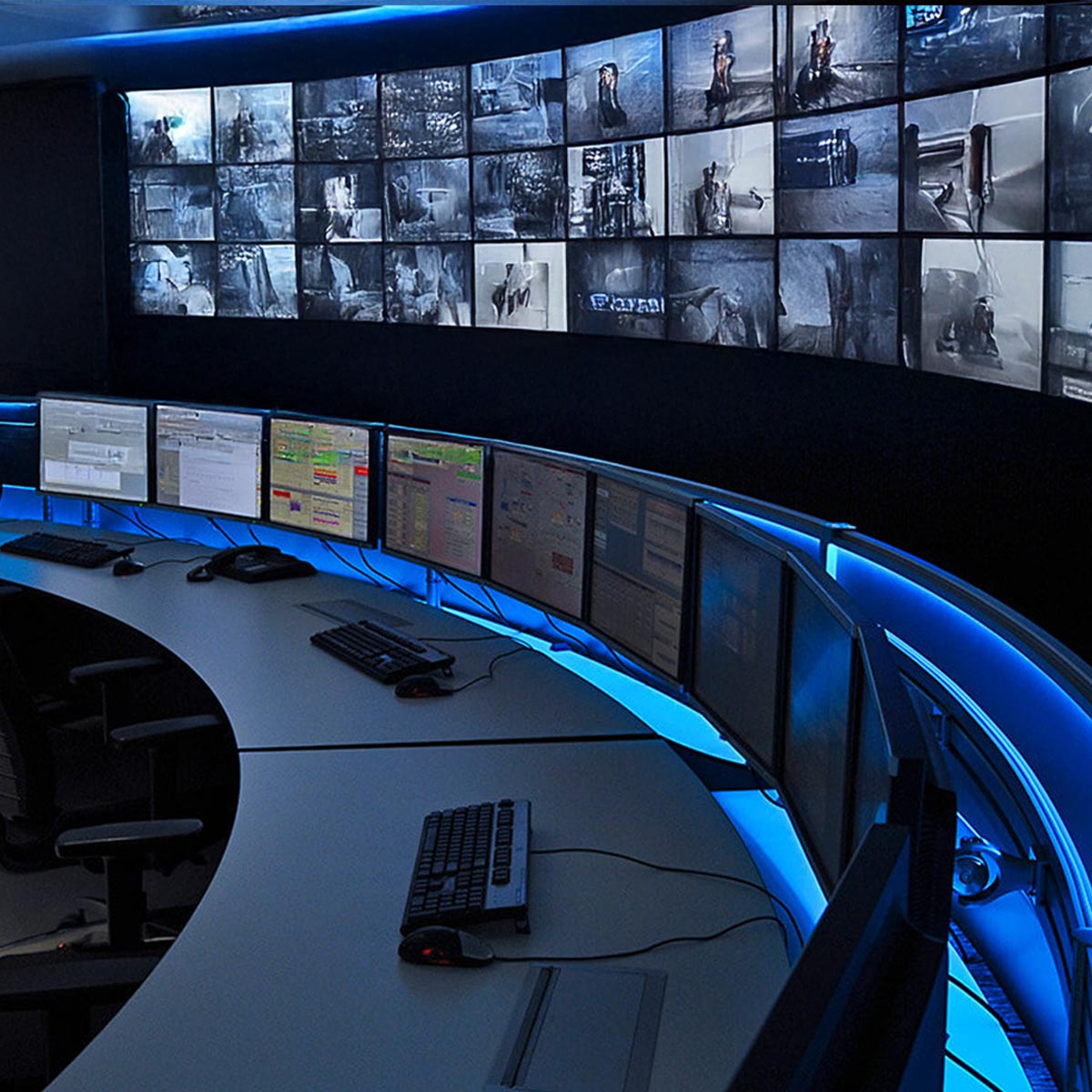
Camera counts vary with site size, security requirements, and retention policy, so there is no universal number. Real-world deployments, however, show how quickly the scale can grow. For example, a refinery with more than 200 IP cameras and 90 days of retention has been reported. Major airports can run several thousand cameras; published reports have cited around 3,000 cameras at Singapore Changi and up to 9,000 CCTV cameras in Istanbul Airport’s terminal facilities.
To put the storage footprint into perspective, assume H.265 recording at a constant 6 Mbps. Based on a camera manufacturer’s storage-consumption figures, an 8MP camera under these conditions generates roughly 64.8 GB per day, or about 1.944 TB over 30 days. That translates to approximately:
- 200 refinery cameras: 389 TB per month
- 3,000 airport cameras: 5.8 PB per month
- 9,000 cameras at a very large airport: 17.5 PB per month
- 100,000 city cameras: 194 PB per month
These are planning calculations, not the actual storage footprints of those sites. Resolution, frame rate, H.264/H.265, VBR/CBR, continuous versus motion-triggered recording, and retention policy can materially change the real numbers. Even so, the calculation makes the point: as camera counts rise and higher resolutions become standard, video storage moves from a side concern to core enterprise infrastructure.
Data growth is not driven by camera count alone. Moving from Full HD to 4K, deploying multi-lens cameras, increasing frame rates, recording continuously, and extending retention periods can all drive capacity requirements sharply upward.
Xendure: Storage Infrastructure for Large-Scale Security Video
When a deployment reaches hundreds or thousands of cameras, managing capacity, expansion, data protection, and video access across multiple independent servers or storage arrays becomes increasingly complex. Organizations need a large, unified, expandable storage pool capable of ingesting many concurrent video streams while retaining massive volumes of recorded footage.
Xendure can serve as the centralized storage layer with a Distributed, Scale-Out architecture. Capacity grows by adding nodes, so organizations do not have to replace the entire storage platform as camera counts increase. This is particularly valuable for refineries, airports, metro systems, rail networks, and city control centers where camera fleets continue to expand.
Another key advantage is the ability to keep large video archives in a unified storage namespace. A Video Management System (VMS) can serve the camera feeds to operators, while the organization can implement tiered retention—for example, keeping recent footage on faster storage and moving older footage to more cost-efficient tiers according to its security policy.
Ultimately, Xendure is about more than simply adding capacity. The goal is to provide an infrastructure layer that can absorb continuous video growth without creating a collection of isolated storage silos. For organizations where camera footage may be the only evidence of an accident, theft, violation, fire, or security incident, that infrastructure becomes part of the information-protection and business-continuity architecture—keeping large-scale security video accessible, manageable, and retained for as long as required.